Product Overview
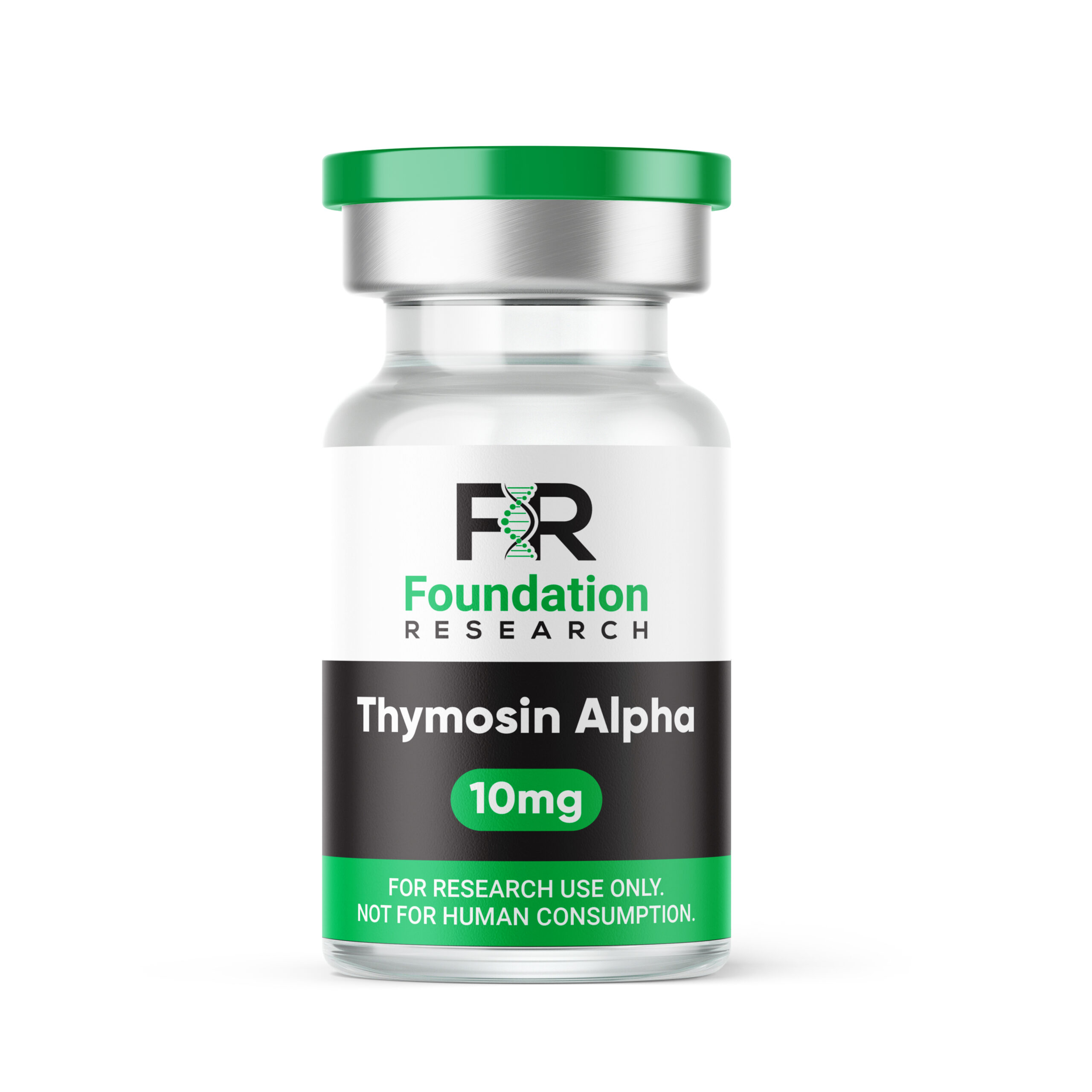
Thymosin Alpha‑1 (TA‑1) is a naturally occurring 28‑amino‑acid peptide derived from the thymus gland, a key organ of the immune system. It is part of the thymosin family of peptides that play critical roles in immune regulation and modulation.
Thymosin Alpha‑1 is synthesized in the laboratory for research purposes to study immune cell signaling, peptide–receptor interactions, and components of the adaptive immune response. It is supplied as a lyophilized white powder with high purity suitable for in vitro and analytical experiments.
Mechanism of Action (Research Context)
Thymosin Alpha‑1 interacts with toll‑like receptors (TLRs) on immune cells, which can activate intracellular signaling pathways involved in immune cell maturation and function. It has been shown to influence the activity and development of crucial immune cell types such as T cells, dendritic cells (DCs), and natural killer (NK) cells in controlled laboratory models.
This peptide’s ability to modulate cytokine production and support antigen presentation makes it useful in research into adaptive immunity, immune cell differentiation, and immune signaling pathways.
Key Features & Scientific Highlights
📌 Immune‑Regulating Peptide: Identified as a naturally occurring immune system peptide that influences immune cell signaling and maturation pathways.
📌 Derived from Thymus Peptides: Produced by cleavage of prothymosin alpha and composed of 28 amino acids.
📌 Research Utility: Used to investigate immune cell responses, receptor interactions, and peptide signaling mechanisms under controlled experimental conditions.
📌 Modulates Immune Factors: In experimental research, it may affect T cell development, dendritic cell function, cytokine signaling, and immunomodulatory pathways in laboratory models.
Research Applications
Researchers may use Thymosin Alpha‑1 10 mg peptide in scientific studies to explore:
🔬 Immune cell signaling and receptor interactions — analyzing how thyme‑derived peptides influence immune pathways and cell communication.
🔬 Adaptive immunity mechanisms — modeling how peptide factors regulate T cell maturation and antigen responses.
🔬 Cytokine and chemokine modulation — studying impacts on immune signaling molecules under defined laboratory conditions.
🔬 Intracellular signaling cascade analysis — investigating pathways activated by thymic peptides binding to immune receptors.
These studies help scientists better understand how peptide regulators influence immune system dynamics in experimental environments.
Biological & Chemical Profile
- Peptide Type: Immune‑related regulatory peptide
- Length: 28 amino acids (Thymosin Alpha‑1)
- Classification: Synthetic thymus‑derived peptide
- Purity: High‑purity research grade
- Physical Form: Lyophilized white peptide powder