Product Overview
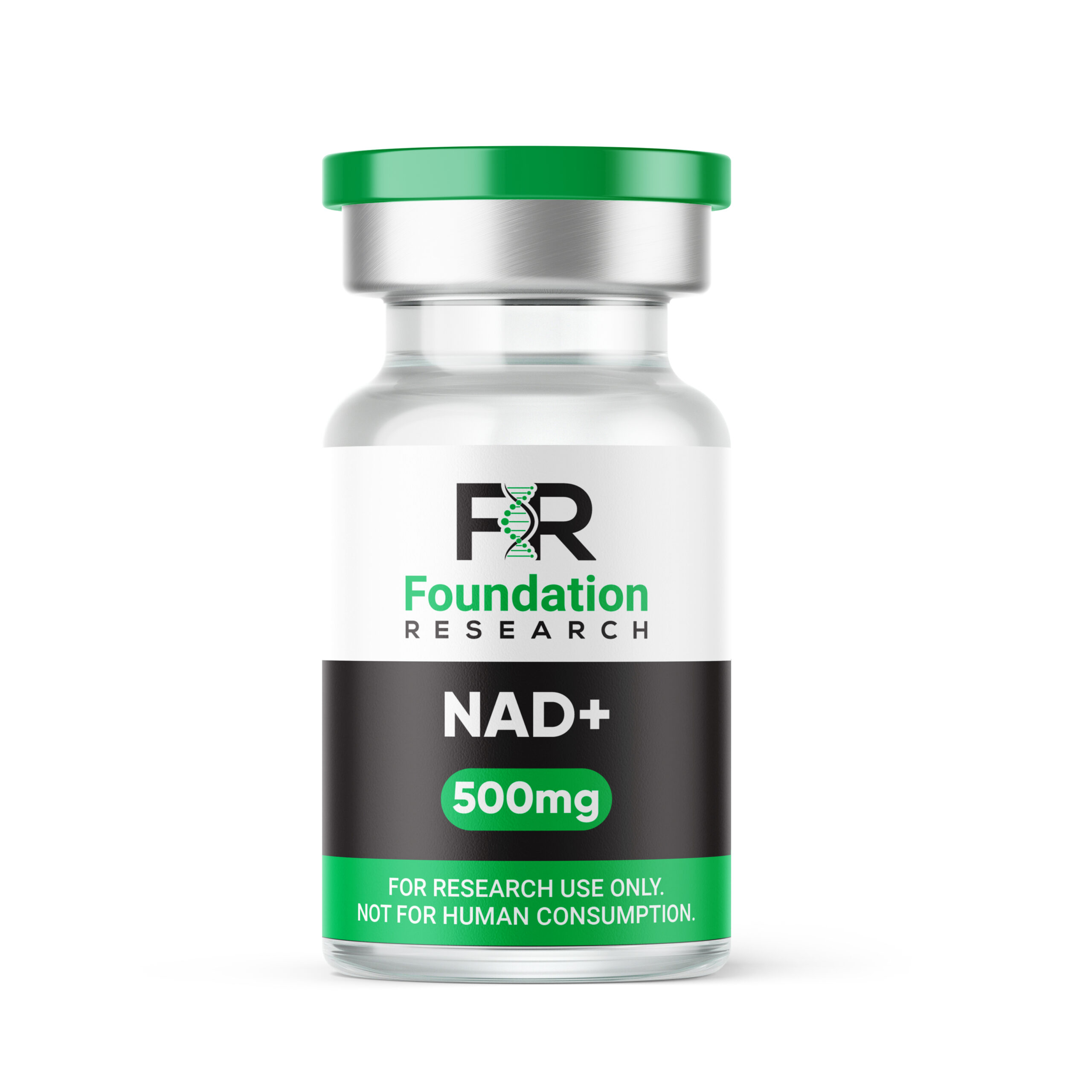
NAD⁺ (Nicotinamide Adenine Dinucleotide) is a naturally occurring coenzyme found in all living cells. It plays a central role in cellular metabolism, energy production, and fundamental biological processes. NAD⁺ participates in redox reactions — transporting electrons during metabolic processes — and acts as a co‑substrate for enzymes that help regulate energy homeostasis and cellular repair mechanisms.
In research settings, NAD⁺ is supplied as a high‑purity, lyophilized powder for laboratory use in biochemical, cellular, and molecular experiments exploring metabolism, mitochondrial function, and age‑related cellular pathways.
Key Biological Functions
1. Central Role in Metabolism
NAD⁺ serves as a crucial electron carrier in energy‑producing pathways such as glycolysis, the citric acid cycle, and oxidative phosphorylation — all processes that generate ATP (“cellular energy”).
2. DNA Repair & Gene Regulation
It functions as a co‑substrate for enzymes like poly(ADP‑ribose) polymerases (PARPs) and sirtuins, which are involved in DNA repair, gene expression, and response to cellular stress.
3. Redox Balance & Cellular Health
NAD⁺ exists in two forms: oxidized (NAD⁺) and reduced (NADH). This balance is essential for oxidation‑reduction (redox) reactions that regulate metabolic processes in cells.
Research & Experimental Applications
Researchers use NAD⁺ in laboratory studies to investigate a variety of cellular mechanisms, including:
🔬 Cellular metabolism and mitochondrial function — studying how energy is produced and managed at the cell level.
🔬 Enzymatic regulation and signaling pathways — analyzing interactions with NAD⁺‑dependent enzymes involved in stress response and longevity pathways.
🔬 DNA repair mechanisms — evaluating the role of NAD⁺ as a co‑substrate in DNA integrity and genomic maintenance.
🔬 Research on aging and cellular decline — exploring how NAD⁺ levels affect metabolic decline and age‑related processes in preclinical models.
Scientific Rationale for NAD⁺ Research
📌 Decline with Age: Levels of NAD⁺ naturally decrease with aging, which has been linked to changes in metabolic function and cellular stress responses. This decline makes NAD⁺ an important target in aging and longevity research.
📌 Enzyme Activity & Cellular Signaling: NAD⁺ is required for key enzyme systems (like sirtuins and PARPs) involved in metabolism, energy regulation, and DNA repair.
📌 Metabolic Studies: NAD⁺ research helps scientists better understand how cells manage energy production and respond to metabolic stress.
Chemical & Biological Profile
- Chemical Name: Nicotinamide Adenine Dinucleotide (oxidized form)
- Formula: C₂₁H₂₈N₇O₁₄P₂⁺ (oxidized)
- Molecular Weight: ~664.4 g/mol (oxidized form)
- Classification: Cofactor / coenzyme essential for redox reactions and metabolic processes
Usage & Safety Notice
🔹 This product is intended strictly for research and laboratory use only.
🔹 It is not intended for human or veterinary therapeutic, clinical, or dietary use.
🔹 Always follow proper laboratory procedures, peptide/biochemical handling protocols, and safety guidelines when working with this compound.