Product Overview
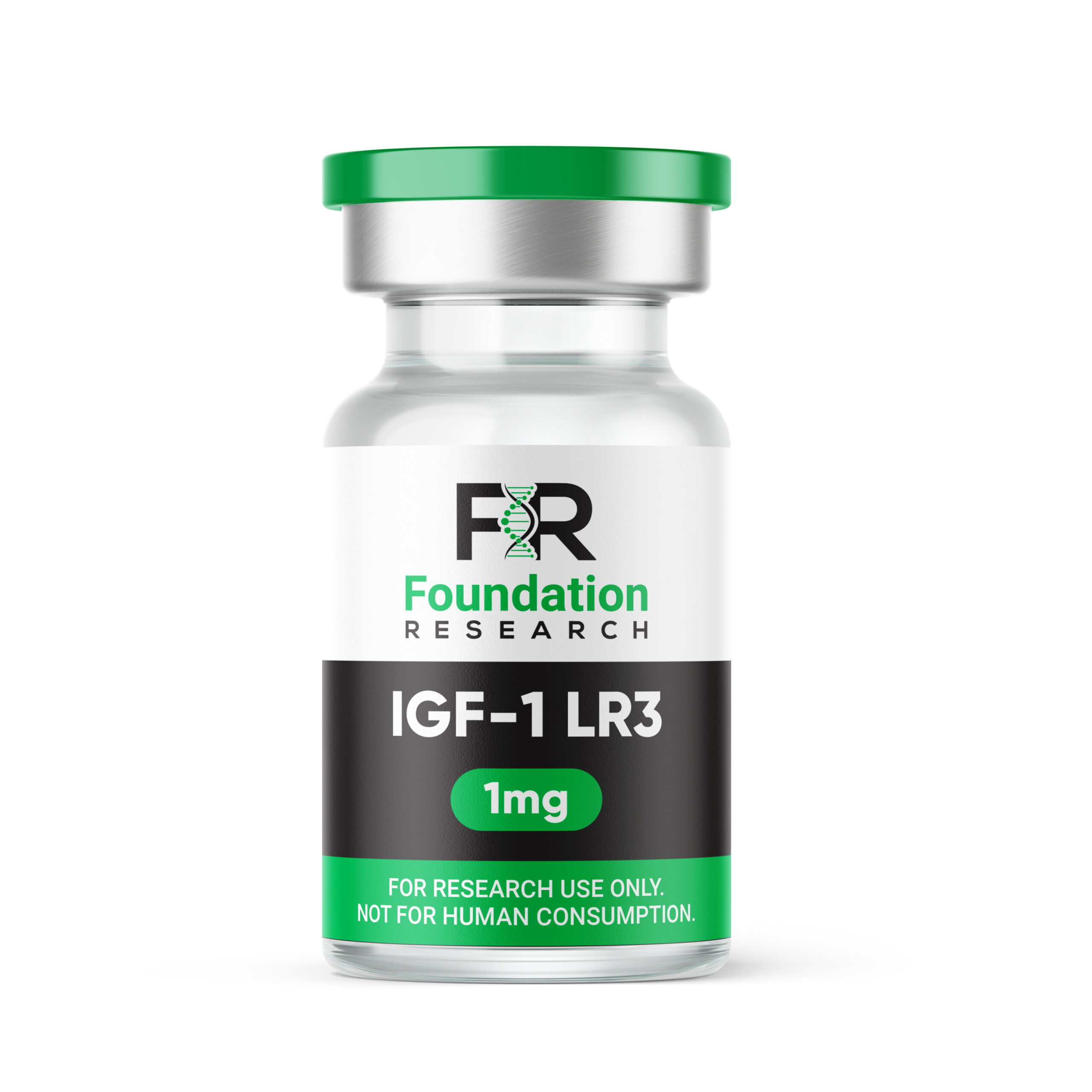
IGF‑1 LR3 (Insulin‑Like Growth Factor‑1 Long R3) is a synthetic analogue of the naturally occurring insulin‑like growth factor‑1 (IGF‑1). It has been molecularly engineered to include a 13‑amino‑acid extension at the N‑terminus and an arginine substitution at position 3, which together alter its binding characteristics and bioactivity compared to native IGF‑1.
These structural modifications make IGF‑1 LR3 less likely to bind with IGF‑binding proteins (IGFBPs) and allow it to remain available to interact with target receptors for longer periods in experimental settings. Because of these changes, IGF‑1 LR3 exhibits enhanced biological stability and potency relative to standard IGF‑1.
Mechanism of Action (Research Context)
IGF‑1 LR3 acts as a ligand for the IGF‑1 receptor, a cell surface receptor involved in growth‑related signaling pathways. Upon binding, it can activate intracellular signaling cascades such as PI3K/Akt and MAPK pathways, which are critical for regulating:
- Cell growth and proliferation
- Protein synthesis and anabolic activity
- Cell differentiation and survival
Because IGF‑1 LR3 binds poorly to IGFBPs, it may maintain higher free concentrations in research assays, allowing more sustained receptor engagement and signaling compared with native IGF‑1.
Key Features & Research Highlights
📌 Long‑acting IGF‑1 analogue: Modified structure that extends peptide stability and reduces deactivation by binding proteins.
📌 Enhanced bioavailability: Reduced IGFBP affinity increases free peptide availability in laboratory models.
📌 Research focus: Commonly used in cellular studies examining growth factor signaling, tissue development, metabolic pathways, and anabolic mechanisms.
📌 Scientific model tool: Valuable for exploring IGF‑1 receptor pharmacology and downstream effects in controlled experimental environments.
Research Applications
Researchers use IGF‑1 LR3 in experimental settings to investigate topics such as:
- Muscle cell proliferation and repair in vitro
- Protein synthesis pathways and anabolic signaling
- Cell survival, differentiation, and growth factor receptor dynamics
- Metabolic activity related to nutrient uptake and cellular energy regulation
It is also studied in preclinical models to help understand how growth factor signaling affects tissue formation and regenerative processes.
Chemical & Biological Profile
- Full Name: Long R3 Insulin‑Like Growth Factor‑1
- Amino Acid Length: 83 amino acids (modified analog)
- Classification: Synthetic peptide analogue of IGF‑1
- Molecular Properties: Enhanced receptor affinity and extended metabolic stability compared with native IGF‑1
Usage Note
✅ This peptide is strictly for research and laboratory use only.
❗ It should not be used for human or veterinary therapeutic purposes, clinical treatment, or ingestion.
⚠️ Always follow proper laboratory safety protocols, peptide handling, and storage guidelines when working with IGF‑1 LR3.